Richmond
Should you call a Richmond auctioneer before junk removal?
If the family has released pieces that may sell, ask an auctioneer to review photos before you book disposal. The useful answer is a list of items they will accept, when they can take possession and what the estate could receive after charges. The house can be emptied before an item sells if the auctioneer agrees to collect it first.

Send enough detail for a decision
Choose a few items that you can describe well. For a dining suite, photograph the whole set, any maker’s label and any damage. Include the number of chairs, table dimensions with and without leaves, and whether the top comes off. For a print or painting, include the signature and the reverse if you can photograph it safely.
Richmond’s Marvel Auctions says it takes estate items on consignment. Its published buyer’s fee applies to the purchaser. Ask for the estate’s seller agreement separately, including commission, any lot or transport charges, the payout date and what happens if the item never sells. An asking price on a resale listing gives you none of those answers.
Work out what the estate would keep
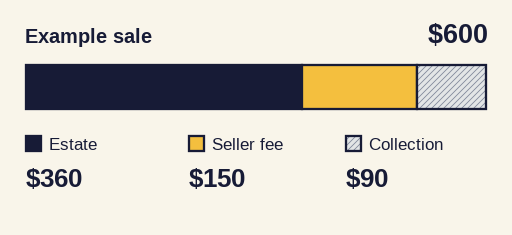
Use the amount an item actually sells for as the starting point. Subtract the seller’s commission, agreed transport and other agreed charges. For illustration, a $600 sale with a hypothetical 25% seller commission and $90 collection leaves $360 before any other applicable costs. Those numbers illustrate the arithmetic. Request the auctioneer’s own terms before budgeting proceeds.
Compare that net amount with the cost of another week of storage, access or a second crew visit, if those costs apply. The family may prefer to keep an item, even when sale proceeds look attractive. Mark that decision before anyone sends the item off-site.
What to get in writing from an auctioneer
| Decision | Useful written answer |
|---|---|
| Acceptance | Identify each accepted lot and list what stays behind. |
| Collection | Give a removal date and say who pays for carrying and transport. |
| Settlement | State the seller commission, other deductions and payment timing. |
| Unsold pieces | Name the fallback destination, deadline and any additional fee. |
Give unsold furniture an exit date
Ask when ownership, storage and collection responsibilities change. Write down the last date an accepted piece can stay in the home, who collects it, and where it goes if a buyer fails to collect. Arrange a separate price for rejected pieces so the crew can finish without waiting for an auction result.
For a small number of eligible leftovers, Richmond publishes a large-item collection program of up to six household items a year for qualifying addresses. Check your property’s eligibility, remaining allowance and confirmed collection date. A listing or enquiry alone will not clear the room by handover day.